
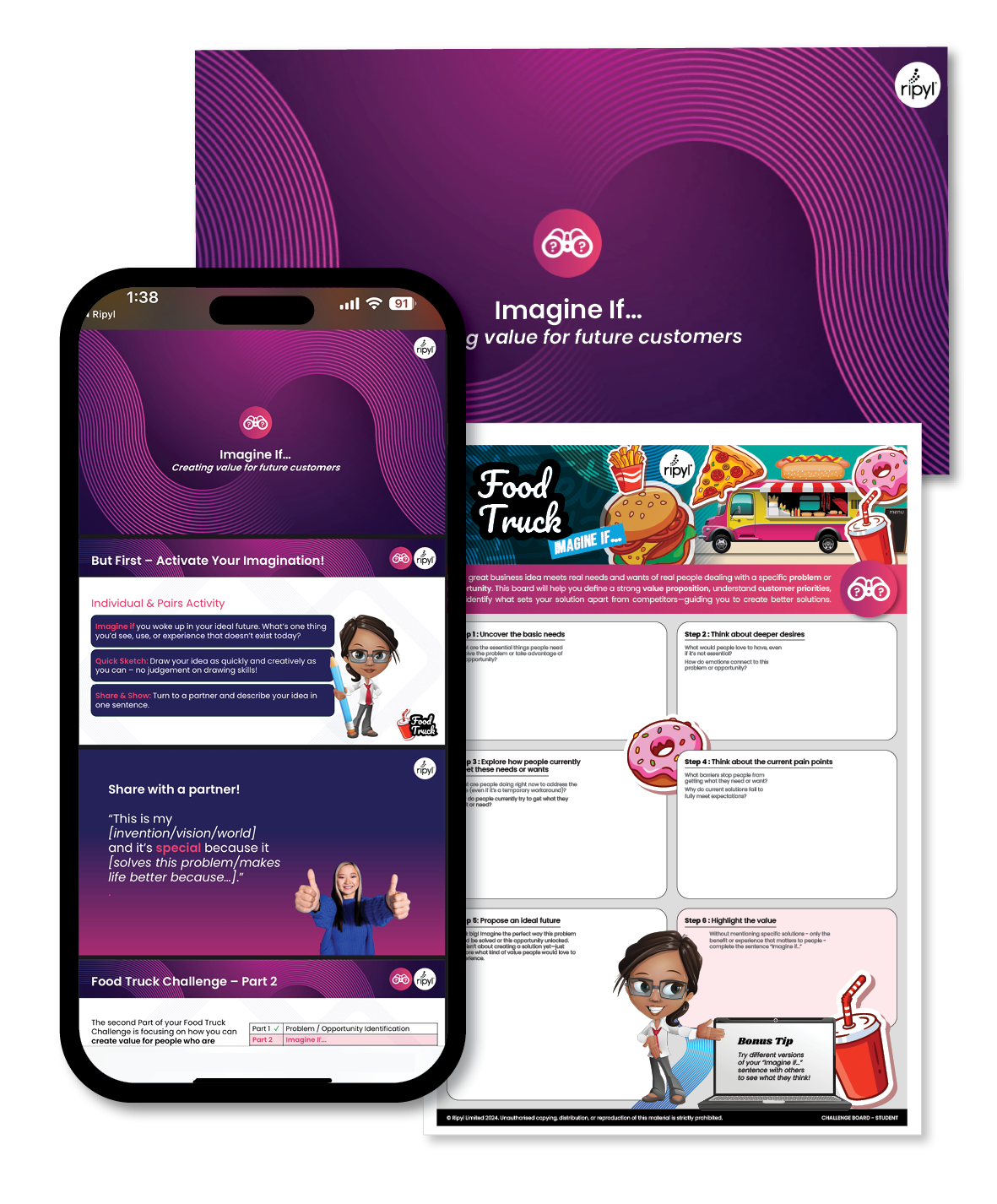
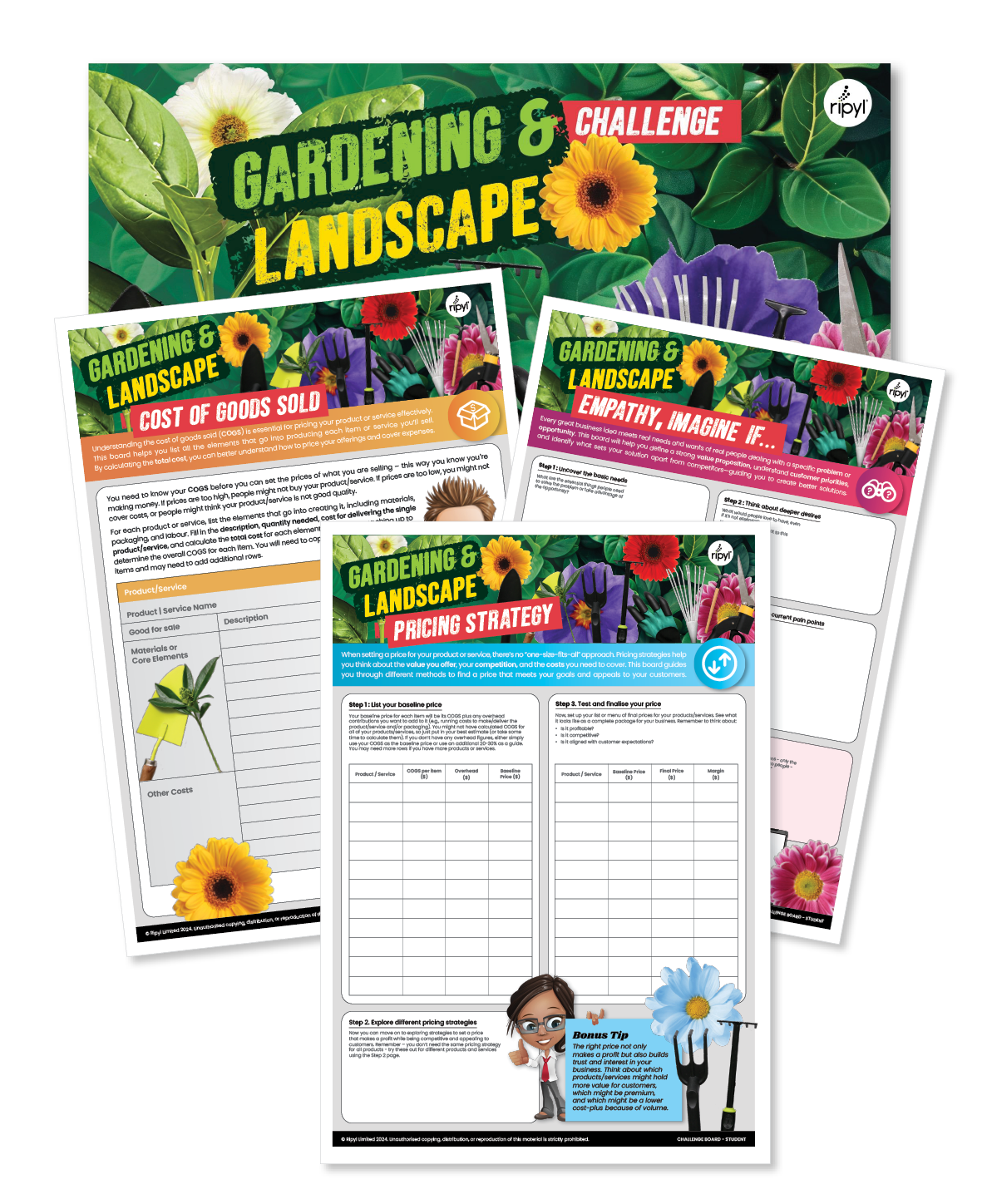
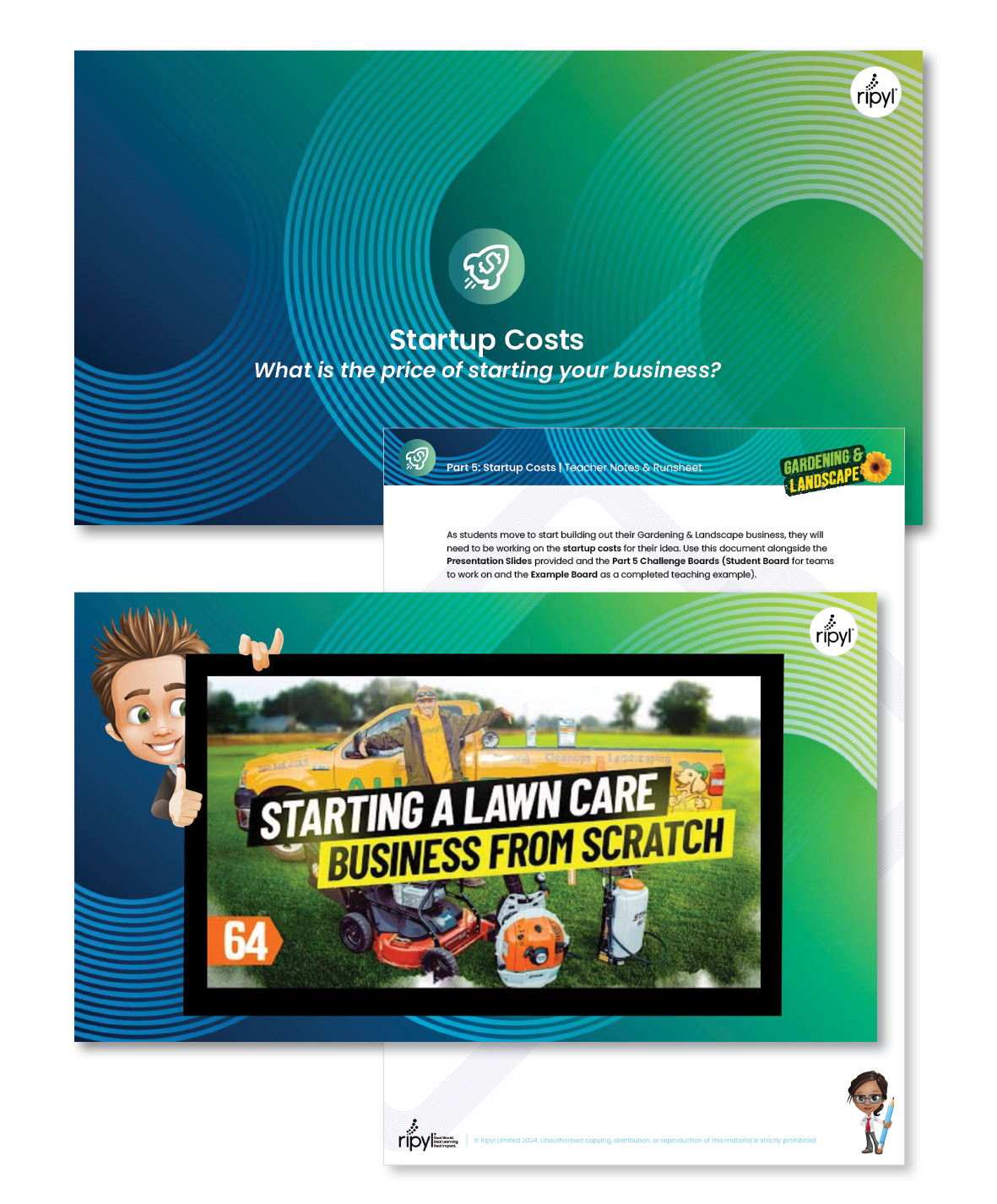
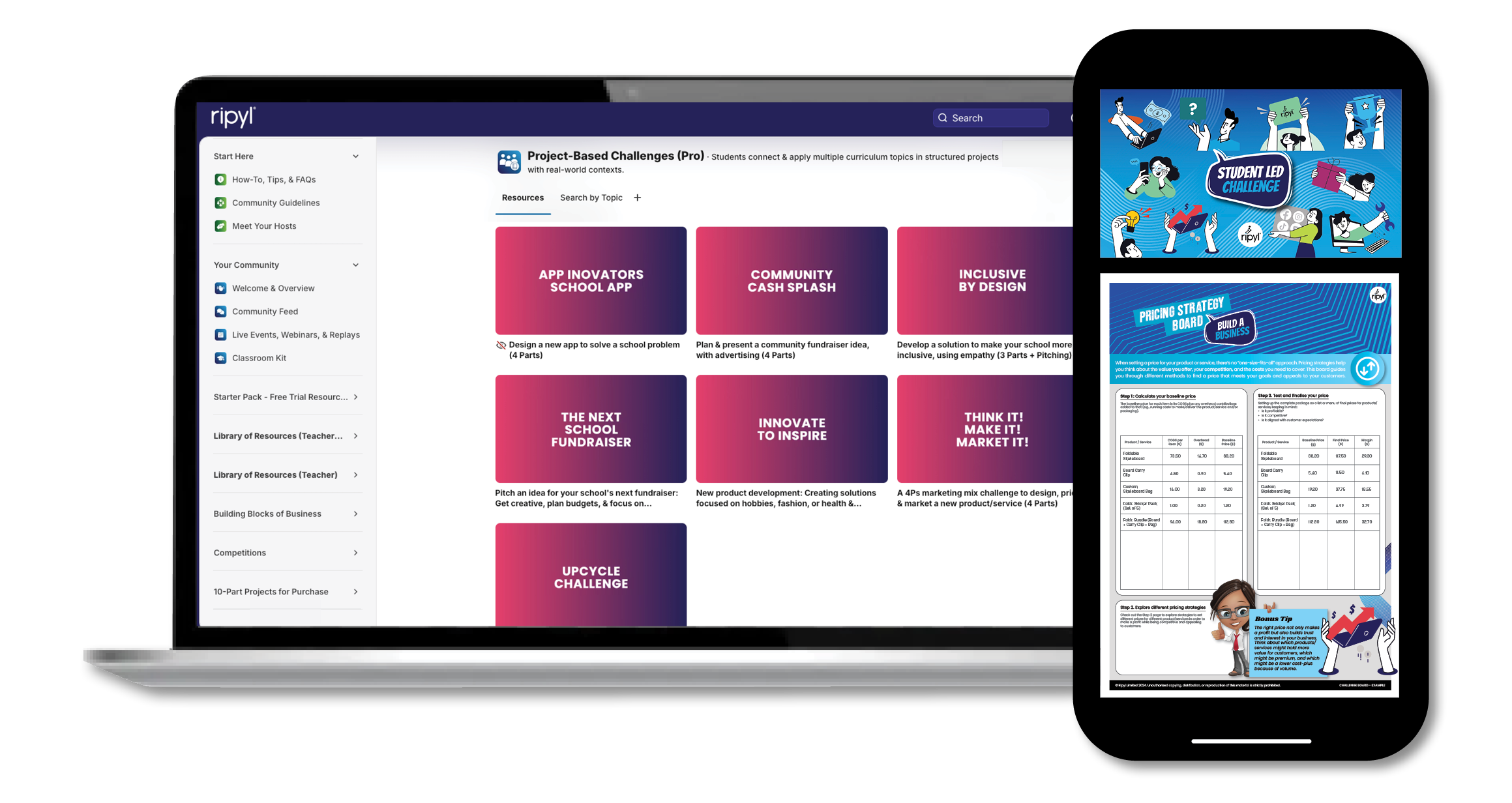
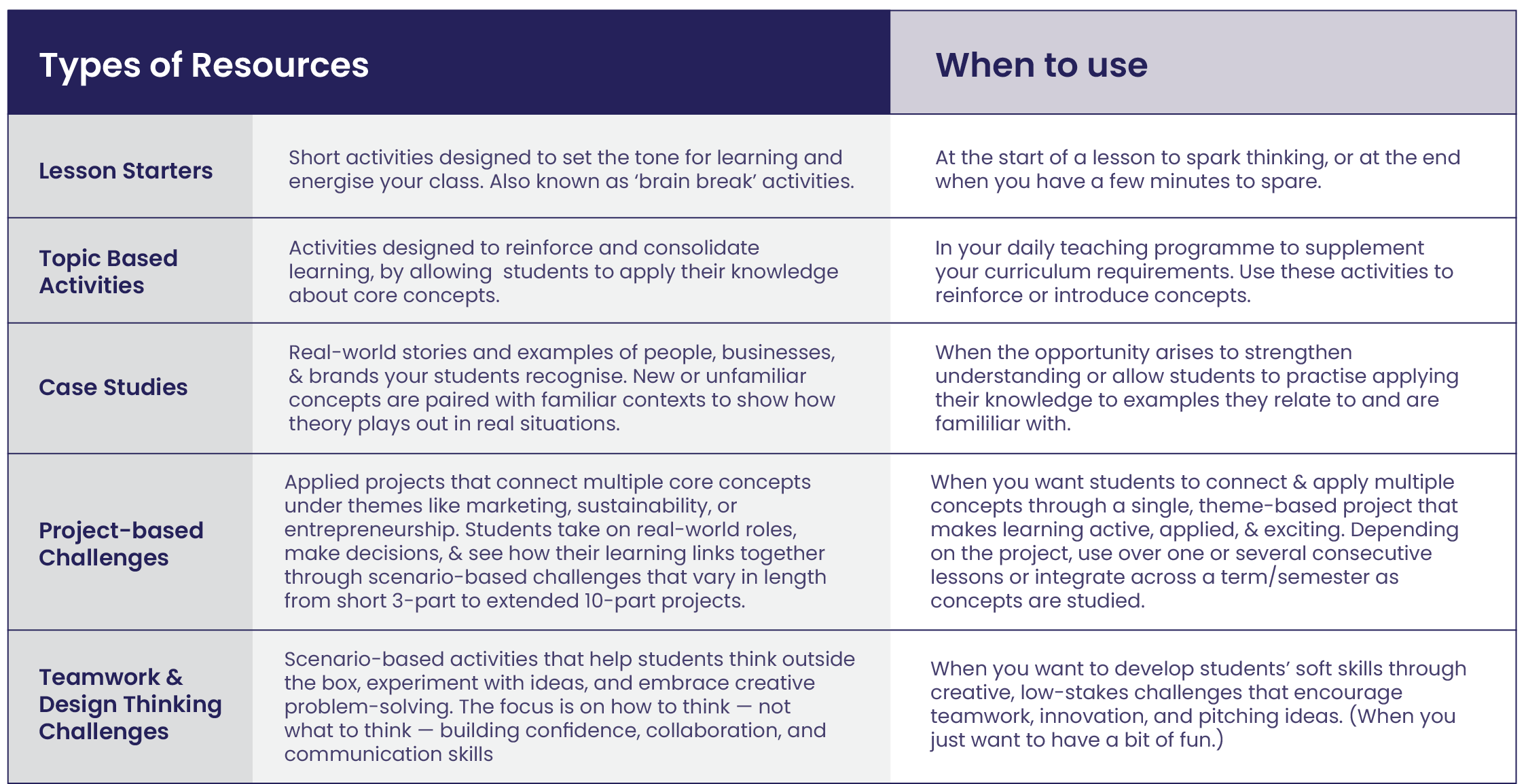
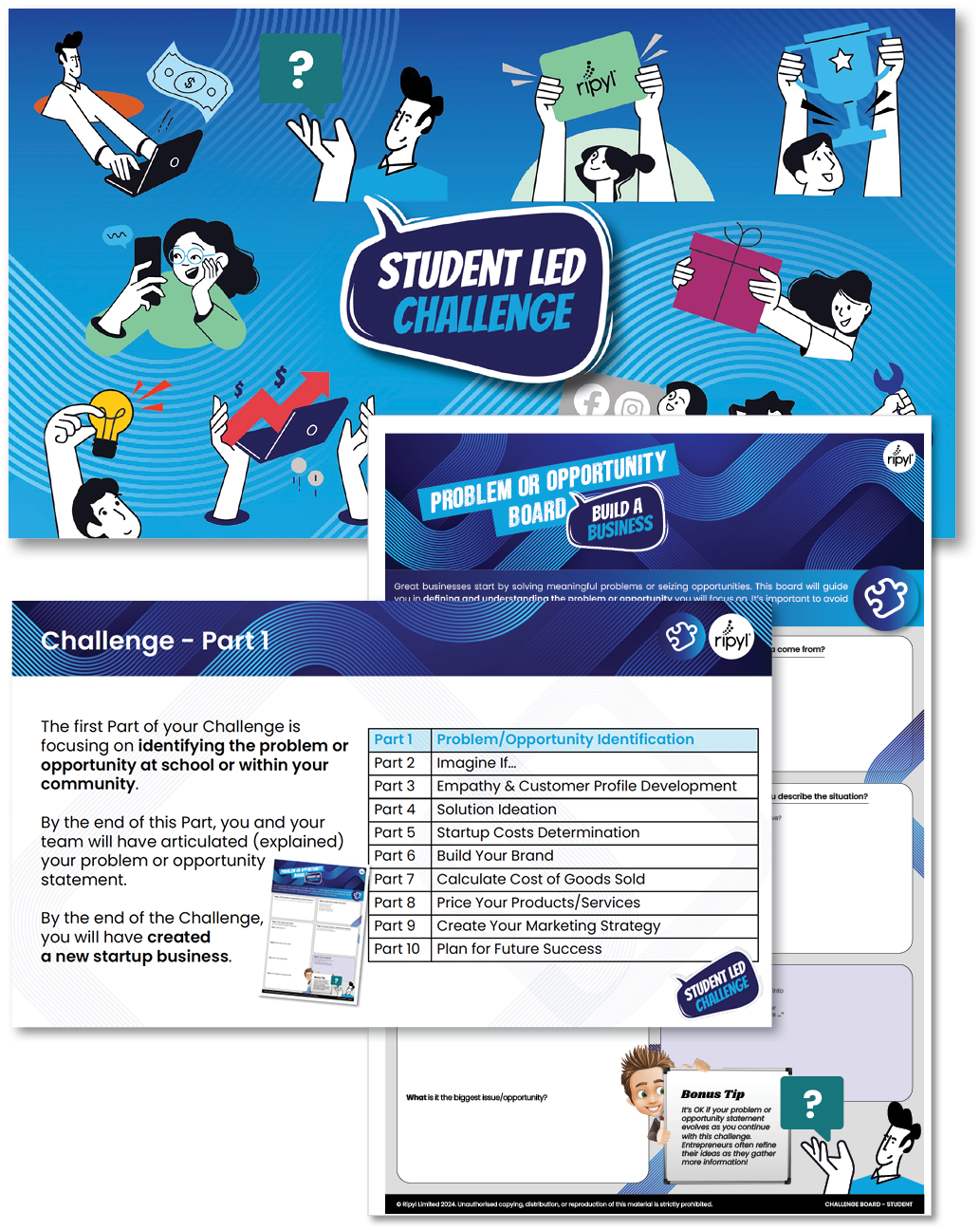
Topic-based challenges are applied projects that connect multiple core concepts under themes like marketing, sustainability, or entrepreneurship. Students take on real-world roles, make decisions, & see how their learning links together through scenario-based challenges that vary in length from short 3-part to extended 10-part projects. Challenges come with dedicated student boards, completed examples, ready-to-use slides for each part and teacher notes.
Project-based challenges are great for:
✅ Extended exploration - giving students the opportunity to work in teams on a project, where they are immersed in a scenario and need to solve problems and make decisions.
✅ Helping students see how multiple business concepts interact in a purposeful way – requiring students to apply their understanding of various concepts to the context given.
✅ Allowing students to work through an entire business idea in a large project (e.g., creating a new startup business in various contexts).
✅ Focusing on a few specific core concepts within a smaller project (e.g., the 4Ps, new product development, or sustainability).
✅ Helping students develop skills such as collaboration, communication, problem-solving, critical thinking, decision making, empathy, and creativity.
Different ways to integrate:
Note: in the overview of all part-based challenges, you will see the core concepts that are covered. For example, part 1 = solution ideation, part 2 = stakeholders, part 3 = costs & pricing, part 4 = advertising. Use the information about the concepts for each part to decide whether you will have students undertake the project in consecutive class sessions, or as you introduce or teach each concept.
Use in consecutive class sessions after teaching all concepts within a project. This could be a final or capstone-type project.
Each part would generally take 1-3 class sessions, depending on class duration, skill level, and whether students undertake homework.
Teachers can facilitate in-class sessions using the part-based guidelines provided.
By allowing students to work in consecutive sessions, you support deeper learning while they remain focused on the single project, building progressively to the end result.
Use alongside your curriculum as you are introducing or teaching the concepts within a project.
After a concept has been covered, students can work on the relevant part of the project.
Parts can be spaced out across a term/semester; they do not need to be forced into a specific timeframe.
It is ideal to refresh students’ work on previous parts if timing requires you to space their work on each part out more than a week or two.
Each part would generally take 1-3 class sessions, depending on class duration, skill level, and whether students undertake homework.
If it suits your class or school, projects can be run as a competition within a class or between classes in the same year/grade.
Projects can also be used as extension or enrichment activities, or as activities within business/entrepreneurship/student enterprise clubs/societies.

Got Questions?
Don’t let another year go by feeling overwhelmed, unprepared, or alone. Ripyl® can help! Reclaim your time, inspire your students and transform your teaching with confidence today! Register for FREE Starter Pack and download some great resources available to you!

For the price* of a coffee get unlimited teaching resources each month!
*We love an extra large flat white with almond milk and a vanilla shot!